When the water gets warmer in the tanks - either due to increased sunlight hours or warmer weather - algae can become an issue. But it can be fatal to angelfish when an algae inhibitor is added to their water. Why? Because it can remove some of the nutrients what angels need to survive.
So I use Algae Fix in a variety of ways that can help keep algae at bay while keeping my angels safe.
I pour a little into the cap so I know how much I am using, and then I pour it onto a tank sponge or cleaning rag set aside for tank use. I then wipe the inside of the glass with it. In my breeding tanks, I also use it to clean the bottom of the tank and for tank fixtures such as the intake.
If decorations become covered in algae, I'll remove the decoration and place it into a small bucket. I'll cover it in water and add algae fix to clean it.
A safe alternative to algae fix is plain old baking soda. A toothbrush can be used to brush off any stubborn algae.
I also have pleco's in each tank as well as mystery snails. They help to keep the algae down in a natural way, particularly my 15-inch pleco.
Showing posts with label algae. Show all posts
Wednesday, March 20, 2013
Thursday, January 17, 2013
Phosphates in a Fish Tank
Earlier this week I mentioned that I got high levels of phosphates in my infant tank, which caused an algae bloom. I traced it back to my water supply. How did I do that? Easy. I have a white bucket in which I pour new water straight from the tap, add the necessary chemicals (Prime, Ph balance, aquarium salt) and use it while replacing the water during water changes. So when I am running water straight from the tap into that bucket and I see it turn green or brown, I know my water source is contaminated.
But are there other causes for high phosphates, which in turn lead to algae blooms?
Yep.
If you are overfeeding your fish, the breakdown of the food often raises phosphate levels. A fish's stomach is roughly the same size as their eye.
Some manufacturers use phosphates in their flake food. Do some research and select one lower in phosphates. I use Tetra flakes and have not had a problem.
Clean the fish tank on a regular basis. Fish waste, uneaten food, plants decaying, or God forbid a dead fish left in the tank, will all raise phosphate levels.
Get some cleaner fish to help get rid of uneaten food that falls into the gravel. I love keeping corydoras with my angelfish. They are both very peaceful and while the angels tend to stay in the middle of the tank, the corys prefer to hang out at the bottom - except when they party while the angels sleep. Snails and a pleco will also help to keep algae levels down.
But are there other causes for high phosphates, which in turn lead to algae blooms?
Yep.
If you are overfeeding your fish, the breakdown of the food often raises phosphate levels. A fish's stomach is roughly the same size as their eye.
Some manufacturers use phosphates in their flake food. Do some research and select one lower in phosphates. I use Tetra flakes and have not had a problem.
Clean the fish tank on a regular basis. Fish waste, uneaten food, plants decaying, or God forbid a dead fish left in the tank, will all raise phosphate levels.
Get some cleaner fish to help get rid of uneaten food that falls into the gravel. I love keeping corydoras with my angelfish. They are both very peaceful and while the angels tend to stay in the middle of the tank, the corys prefer to hang out at the bottom - except when they party while the angels sleep. Snails and a pleco will also help to keep algae levels down.
Thursday, November 8, 2012
Cleaning Day!
Decades ago (gosh, I'm old) I would remove the fish from the tank and clean it from top to bottom. Now I'd like to think I am much smarter - and my fish are healthier and the tanks are cleaner.
This morning I cleaned four tanks in less than two hours. That's less than thirty minutes per tank.
Here are my secrets:
I change 25% of the water in each tank each and every week.
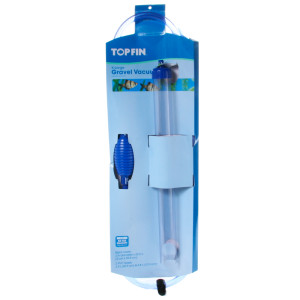
And I use this hose.
My hose is 50 feet long. I have one end connected to my laundry tub so I can easily reach all but one of my eight tanks.
When I am ready to clean the tanks, I turn the blue button on the side and it siphons the water out of the tank. I can siphon 25% of a 70-gallon tank in less than five minutes. I usually clean just one side so the fish congregate on the opposite side. Then the following week, I'll siphon from the other side.
When I am finished siphoning, I turn the blue button on the side and it fills the tank back up. I have a gallon pitcher set aside for aquarium use only, and I add Prime (just half of what is necessary for 20 gallons, the approximate amount I have siphoned out), Ph Neutralizer (if needed) and aquarium salt (only if needed). Then I pour that gallon in slowly while the rest of the water comes straight from the tap through the hose. It takes about five minutes to fill back up.
I use a long-handled algae sponge (see the post from earlier this week) if I notice algae built up on the glass. With a pleco in each tank except the honeymoon suite and the infant tank, I usually don't have algae built-up except in those two tanks. And the algae is beneficial for the baby angels to eat.
The hose comes in longer lengths if needed and it eliminates the mess and time-consuming chore of emptying water into buckets and carrying them laboriously outside to dump.
When I clean the baby angels' tank, I use a hand syphon that does empty into a bucket. Their tank is only 20 gallons so I am removing about 4-5 gallons, enough to fill just one bucket. The hand syphon is much smaller and slower. It won't suck up baby angels in it unless they are very tiny. This has happened to me and I checked the bucket, got out the fish with a net, put them back into the tank and they were not any worse for the wear, believe it or not.
When working with the baby angels' tank, I only use a few drops of Prime. It is easy to overuse Prime and if you do, you are removing important and beneficial elements and bacteria from the water - things they need to survive. If this happens, you should remove about 25% of the water again.
Tetra used to manufacture a product called Cichlid Vitamins, which I loved - because my fish loved it. They stopped producing it so I've switched to amazon extract. I once had a problem with angelfish dying mysteriously and once I began adding this to their water, they thrived. I since learned that I was using too much Prime, stripping the water of all that was needed, and this additive put it back into the water.
I know they are happy with the water conditions because angels will only lay eggs if conditions are perfect. So if you have angels that are not breeding and you're relatively certain you have a male and a female, try the amazon extract.
Tomorrow: meet the dogs who are by my side while I work with the aquariums.
This morning I cleaned four tanks in less than two hours. That's less than thirty minutes per tank.
Here are my secrets:
I change 25% of the water in each tank each and every week.
And I use this hose.
My hose is 50 feet long. I have one end connected to my laundry tub so I can easily reach all but one of my eight tanks.
When I am ready to clean the tanks, I turn the blue button on the side and it siphons the water out of the tank. I can siphon 25% of a 70-gallon tank in less than five minutes. I usually clean just one side so the fish congregate on the opposite side. Then the following week, I'll siphon from the other side.
When I am finished siphoning, I turn the blue button on the side and it fills the tank back up. I have a gallon pitcher set aside for aquarium use only, and I add Prime (just half of what is necessary for 20 gallons, the approximate amount I have siphoned out), Ph Neutralizer (if needed) and aquarium salt (only if needed). Then I pour that gallon in slowly while the rest of the water comes straight from the tap through the hose. It takes about five minutes to fill back up.
I use a long-handled algae sponge (see the post from earlier this week) if I notice algae built up on the glass. With a pleco in each tank except the honeymoon suite and the infant tank, I usually don't have algae built-up except in those two tanks. And the algae is beneficial for the baby angels to eat.
The hose comes in longer lengths if needed and it eliminates the mess and time-consuming chore of emptying water into buckets and carrying them laboriously outside to dump.
When I clean the baby angels' tank, I use a hand syphon that does empty into a bucket. Their tank is only 20 gallons so I am removing about 4-5 gallons, enough to fill just one bucket. The hand syphon is much smaller and slower. It won't suck up baby angels in it unless they are very tiny. This has happened to me and I checked the bucket, got out the fish with a net, put them back into the tank and they were not any worse for the wear, believe it or not.
When working with the baby angels' tank, I only use a few drops of Prime. It is easy to overuse Prime and if you do, you are removing important and beneficial elements and bacteria from the water - things they need to survive. If this happens, you should remove about 25% of the water again.
Tetra used to manufacture a product called Cichlid Vitamins, which I loved - because my fish loved it. They stopped producing it so I've switched to amazon extract. I once had a problem with angelfish dying mysteriously and once I began adding this to their water, they thrived. I since learned that I was using too much Prime, stripping the water of all that was needed, and this additive put it back into the water.
I know they are happy with the water conditions because angels will only lay eggs if conditions are perfect. So if you have angels that are not breeding and you're relatively certain you have a male and a female, try the amazon extract.
Tomorrow: meet the dogs who are by my side while I work with the aquariums.
Monday, November 5, 2012
I Can't See the Fish for the Algae!
Algae grows naturally in aquariums. In small doses, it is beneficial to fish. But it can coat the inside of the glass and grow on every object, large and small, quickly creating an unsightly and embarrassing centerpiece.
What's a fish keeper to do?
Watch where you place your tank. Do not place it near windows or in direct sunlight. The more light the tank gets, the greater the chances of algae growing out of control.
Monitor the hours you keep the tank lights on. Try for no more than 8 hours a day. If you enjoy the lights on the aquarium (and who doesn't) take stock of when you are actually around to enjoy it. I have mine on for about three hours in the morning and about five hours in the evening.
Wash off the algae. I have two sets of decorations. When one set gets more algae than I'd prefer to have (and my tolerance for algae is pretty low) I remove those and put in the second set. And how do I clean the algae off the first set? It's easy. The best cleaner for fish tanks is: baking soda. Yep, that's right. I rinse off the decoration, then I place it in a shallow pan and sprinkle baking soda all over it. You can rinse it off after a few hours or a few days, depending on the severity of the problem. If you fail to rinse all of it off, it will not harm the fish - but it will drop the Ph. So you'll want to rinse it as thoroughly as you can. Using a toothbrush that you never used before is helpful for brushing off any excess algae.
Stay away from fast-acting algae removal products. They work by eliminating the elements in the water that algae feeds on. But it can zap so much of the minerals needed for the fish to live that they will actually suffocate. I watched an entire tank suffer due to one of these products and it is heart-wrenching.
Clean the glass yourself. I've used a number of products to clean the inside glass and the best I've found is a simple sponge (AKA algae pad) on a long handle.
There are also magnetic sponges sold that are very helpful when your fish don't like your hands in their water - like the parents of the baby fish they are protecting.
Hire someone to clean your glass. I like plecos. Because my angelfish get so large, I prefer to have one pleco in each tank. They can grow to five inches long (the bushynose pleco) to more than 21 inches in length so check with your pet store to find out how large your pleco will get when it is fully mature. They love algae and will spend most of the night time hours scouring your tank for it.
Do not get ottos for an angelfish tank. They are excellent at cleaning algae and I use them in my guppy and neon tetra tanks because they are a similar size. But they are so small that angelfish think of them as food. And since ottos can be very bony, they can injure the mouths of the angels who taste them.
The pleco in the picture at right will grow to 15 inches in length. But I'll never put one in a tank of breeding angels because, although plecos are primarily vegetarian, the angelfish parents will assume they're out to eat their young. And they might accidentally suck some in with those huge lips. This pleco's name is Mick Jaggarfish.
What's a fish keeper to do?
Watch where you place your tank. Do not place it near windows or in direct sunlight. The more light the tank gets, the greater the chances of algae growing out of control.
Monitor the hours you keep the tank lights on. Try for no more than 8 hours a day. If you enjoy the lights on the aquarium (and who doesn't) take stock of when you are actually around to enjoy it. I have mine on for about three hours in the morning and about five hours in the evening.
Wash off the algae. I have two sets of decorations. When one set gets more algae than I'd prefer to have (and my tolerance for algae is pretty low) I remove those and put in the second set. And how do I clean the algae off the first set? It's easy. The best cleaner for fish tanks is: baking soda. Yep, that's right. I rinse off the decoration, then I place it in a shallow pan and sprinkle baking soda all over it. You can rinse it off after a few hours or a few days, depending on the severity of the problem. If you fail to rinse all of it off, it will not harm the fish - but it will drop the Ph. So you'll want to rinse it as thoroughly as you can. Using a toothbrush that you never used before is helpful for brushing off any excess algae.
Stay away from fast-acting algae removal products. They work by eliminating the elements in the water that algae feeds on. But it can zap so much of the minerals needed for the fish to live that they will actually suffocate. I watched an entire tank suffer due to one of these products and it is heart-wrenching.
Clean the glass yourself. I've used a number of products to clean the inside glass and the best I've found is a simple sponge (AKA algae pad) on a long handle.
There are also magnetic sponges sold that are very helpful when your fish don't like your hands in their water - like the parents of the baby fish they are protecting.
Hire someone to clean your glass. I like plecos. Because my angelfish get so large, I prefer to have one pleco in each tank. They can grow to five inches long (the bushynose pleco) to more than 21 inches in length so check with your pet store to find out how large your pleco will get when it is fully mature. They love algae and will spend most of the night time hours scouring your tank for it.
Do not get ottos for an angelfish tank. They are excellent at cleaning algae and I use them in my guppy and neon tetra tanks because they are a similar size. But they are so small that angelfish think of them as food. And since ottos can be very bony, they can injure the mouths of the angels who taste them.
The pleco in the picture at right will grow to 15 inches in length. But I'll never put one in a tank of breeding angels because, although plecos are primarily vegetarian, the angelfish parents will assume they're out to eat their young. And they might accidentally suck some in with those huge lips. This pleco's name is Mick Jaggarfish.
Subscribe to:
Posts (Atom)